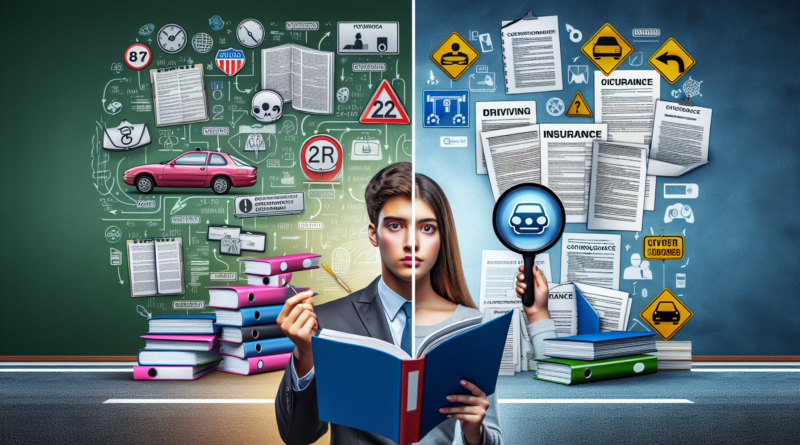
Understanding Car Insurance for Students
Car insurance is a crucial aspect of vehicle ownership, providing financial protection against accidents, theft, and other unforeseen events. For student drivers, understanding the nuances of car insurance is essential. Insurance policies typically cover liability, collision, and comprehensive damages, each offering different levels of protection. **Liability insurance** covers damages to other vehicles or property, while **collision insurance** addresses damages to the insured’s car. **Comprehensive insurance** covers non-collision-related incidents like theft or natural disasters.
Education’s Role in Insurance Rates
Education plays a significant role in determining car insurance rates for student drivers. Insurers often consider a student’s academic performance when calculating premiums. **Good grades** can lead to discounts, as they are seen as indicators of responsible behavior. Many insurance companies offer a **Good Student Discount** to those maintaining a certain GPA, typically a B average or higher. This incentive encourages students to excel academically while also making insurance more affordable.
Why Insurers Value Education
Insurance companies value education because it correlates with lower risk. Studies have shown that students who perform well academically are less likely to engage in risky driving behaviors. This perception of responsibility translates into reduced accident rates, making educated drivers more attractive to insurers. As a result, students who prioritize their education can benefit from lower insurance premiums, reinforcing the importance of academic success.
Maximize Savings with Education
Students can maximize their savings on car insurance by maintaining good grades and participating in driver education programs. These efforts not only reduce premiums but also promote safer driving habits. By focusing on education, student drivers can enjoy both financial and personal benefits.
Driver education programs are another critical factor in the relationship between car insurance and education. These programs teach young drivers the rules of the road, safe driving techniques, and the importance of defensive driving. Completing a driver education course can lead to additional discounts on insurance premiums. Insurers view these programs as valuable tools in reducing accident risks, further emphasizing the link between education and insurance savings.
The Impact of School Location
The location of a student’s school can also influence car insurance rates. Urban areas with high traffic volumes and accident rates may result in higher premiums compared to rural areas. Insurers assess the risk associated with a student’s daily commute, considering factors like traffic congestion and accident statistics. Students attending schools in safer, less congested areas may benefit from lower insurance costs.
Balancing Education and Driving Responsibilities
Balancing education and driving responsibilities is crucial for student drivers. Prioritizing academic success while adhering to safe driving practices can lead to significant insurance savings. Students should focus on time management, ensuring they allocate sufficient time for both studies and driving. By maintaining a balance, students can achieve academic excellence and responsible driving, ultimately benefiting from reduced insurance premiums.
Achieve Success on the Road and in School
Student drivers can achieve success both on the road and in school by prioritizing education and safe driving practices. By doing so, they can enjoy the benefits of lower insurance premiums and a safer driving experience. Embrace the dual responsibility of being a student and a driver to maximize your potential.
Parental guidance plays a vital role in shaping a student driver’s habits and understanding of car insurance. Parents can educate their children about the importance of maintaining good grades and safe driving practices. By setting a positive example and discussing the financial implications of car insurance, parents can help their children make informed decisions. Encouraging participation in driver education programs and emphasizing the value of education can lead to long-term benefits for student drivers.
Conclusion: Education and Insurance Go Hand in Hand
In conclusion, the relationship between car insurance and education for student drivers is multifaceted. Education influences insurance rates through academic performance, driver education programs, and school location. By prioritizing education and safe driving, students can enjoy reduced insurance premiums and a safer driving experience. Parents play a crucial role in guiding their children, reinforcing the importance of education and responsible driving. Ultimately, education and insurance go hand in hand, offering financial and personal benefits to student drivers.