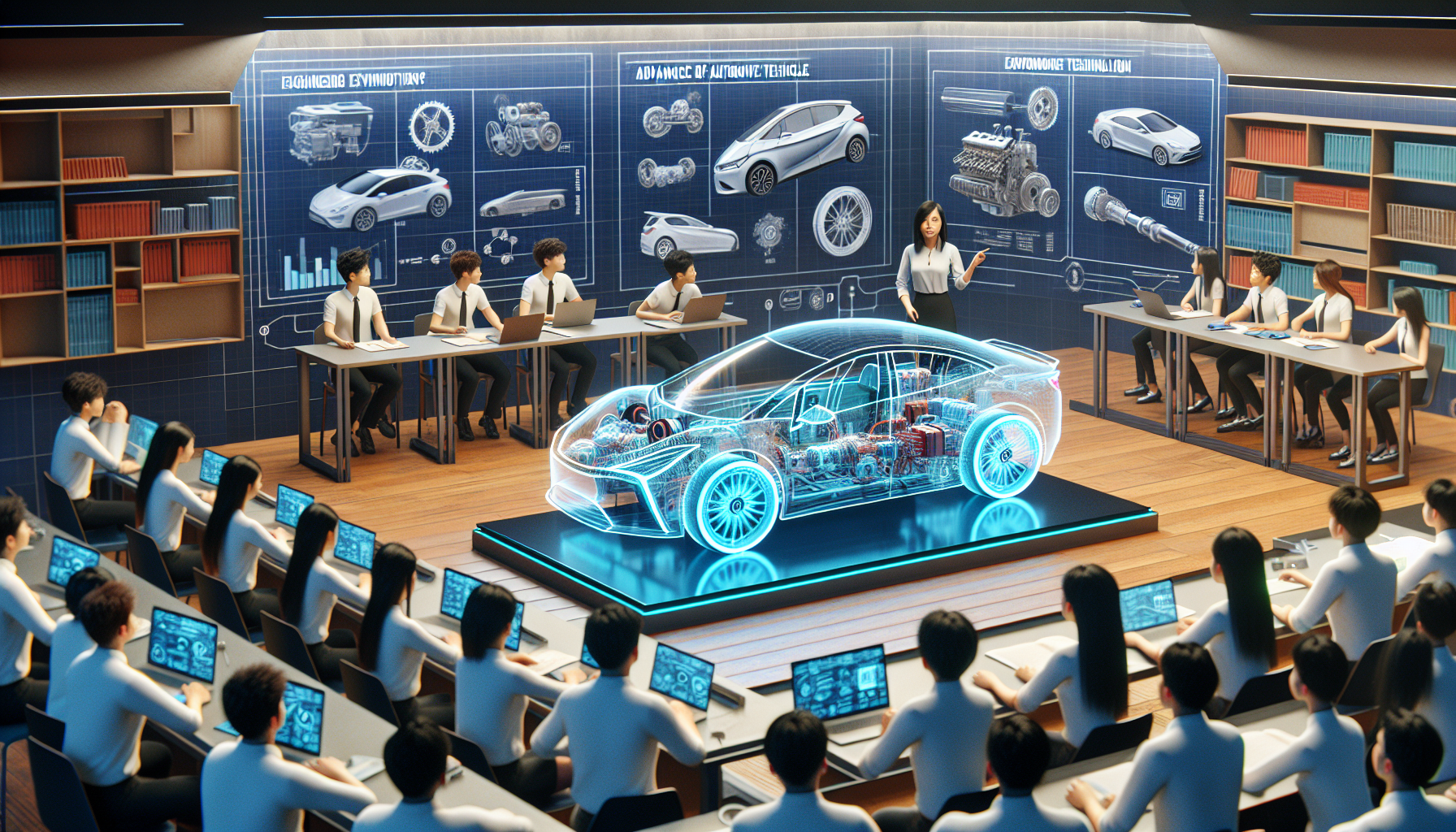
The Role of STEM in Automotive Evolution
STEM, an acronym for Science, Technology, Engineering, and Mathematics, is an educational approach that integrates these disciplines into a cohesive learning paradigm. This method encourages students to think critically and solve complex problems, skills that are essential in today’s rapidly evolving technological landscape. In the context of automotive technology, STEM education provides the foundational knowledge necessary to innovate and adapt to new advancements.
Why STEM is Crucial for Automotive Technology
The automotive industry is undergoing a significant transformation with the advent of electric vehicles, autonomous driving, and smart connectivity. These advancements require a workforce proficient in STEM disciplines to design, develop, and maintain cutting-edge technologies. **
STEM education equips students with the skills needed to tackle these challenges, ensuring the industry continues to thrive and innovate. **
STEM Skills in Automotive Careers
The future of automotive technology relies heavily on STEM skills. Engineers and designers must understand complex systems, from battery technology in electric vehicles to the algorithms driving autonomous cars. By fostering a strong STEM foundation, educational institutions can prepare students for a variety of roles within the automotive sector, ensuring a steady pipeline of talent to meet industry demands.
Electric vehicles (EVs) are at the forefront of the automotive revolution. **
STEM education plays a pivotal role in the development of EV technology **, from improving battery efficiency to enhancing charging infrastructure. Students with a strong STEM background are better equipped to innovate in areas such as energy storage, power electronics, and sustainable materials, all of which are crucial for the advancement of EVs.
Autonomous Driving and STEM
Autonomous vehicles represent a significant leap forward in automotive technology, relying on complex algorithms and sensor systems to navigate and make decisions. **
STEM education is essential for developing the artificial intelligence and machine learning models that power these vehicles **. By understanding the principles of robotics, computer science, and data analysis, students can contribute to the safe and efficient deployment of autonomous driving technologies.
Preparing for a STEM-Driven Future
As the automotive industry continues to evolve, the demand for STEM-educated professionals will only increase. Educational programs must adapt to provide students with the necessary skills to succeed in this dynamic field. By emphasizing STEM education, we can ensure that the next generation of automotive professionals is ready to tackle the challenges and opportunities of the future.
The integration of smart connectivity in vehicles is another area where STEM education is indispensable. **
From developing vehicle-to-everything (V2X) communication systems to enhancing cybersecurity measures **, STEM skills are crucial. Students with expertise in network engineering, software development, and data security will be at the forefront of creating connected car technologies that improve safety and user experience.
Challenges and Opportunities in STEM Education
While the importance of STEM education is clear, there are challenges to its widespread implementation. **
Schools must overcome barriers such as limited resources and a shortage of qualified teachers **. However, these challenges also present opportunities for innovation in educational practices. By leveraging technology and fostering partnerships with industry leaders, educational institutions can enhance STEM learning experiences and better prepare students for careers in automotive technology.
The Future of Automotive Technology
The automotive industry is on the brink of a technological revolution, driven by advancements in STEM fields. By investing in STEM education today, we can ensure a future where innovative automotive technologies continue to improve our lives. Whether it’s through electric vehicles, autonomous driving, or smart connectivity, the possibilities are endless for those equipped with STEM skills.
In conclusion, the need for STEM education in the context of future automotive technology cannot be overstated. **
As the industry evolves, the demand for skilled professionals who can navigate and innovate within this space will only grow **. By prioritizing STEM education, we can cultivate a generation of thinkers and doers who will drive the automotive industry forward, ensuring a future of sustainable, efficient, and intelligent transportation solutions.