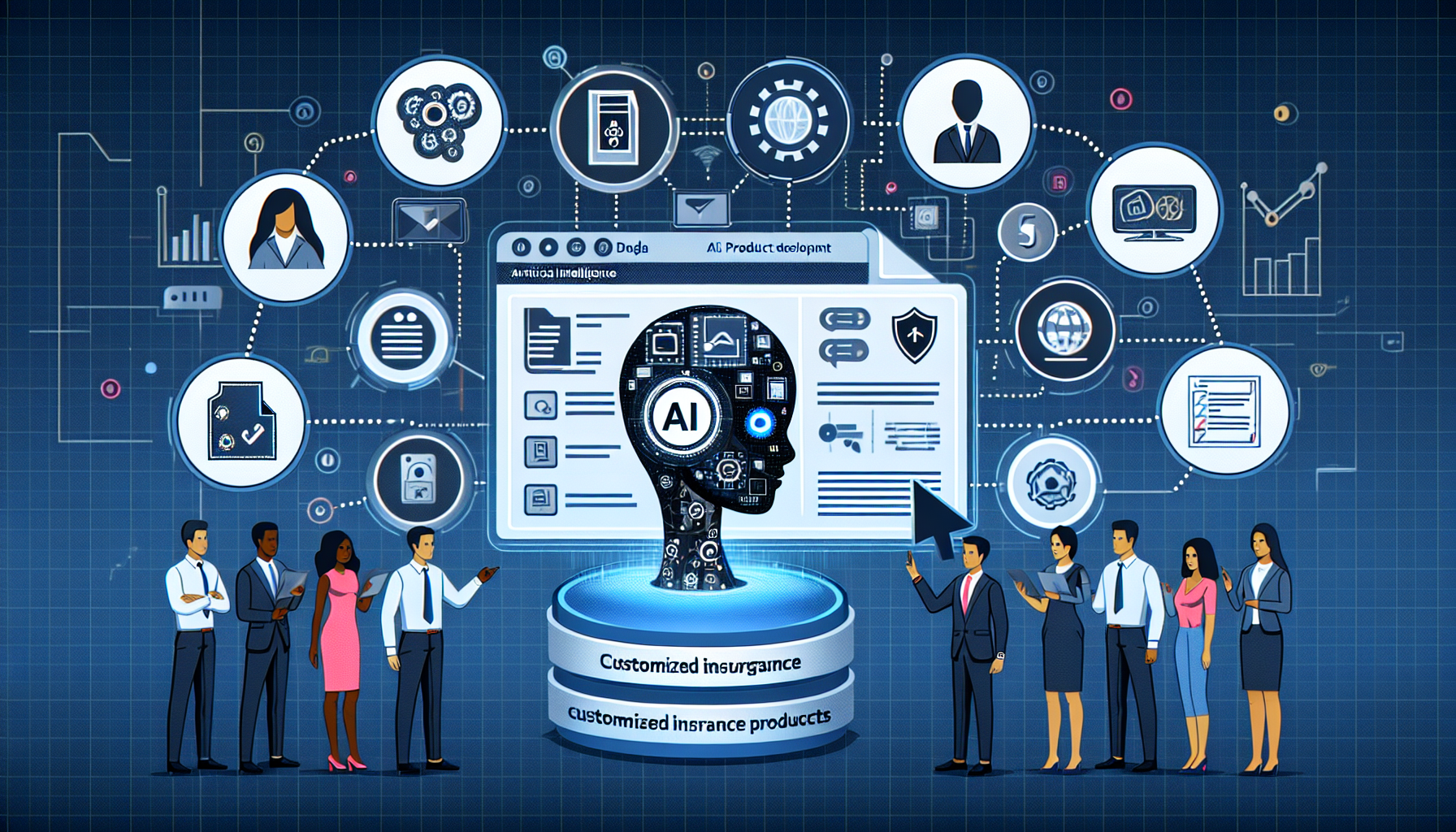
AI’s Impact on Insurance Development
Artificial Intelligence (AI) is transforming the insurance industry by enhancing product development and enabling the creation of customized insurance solutions. AI technologies, such as machine learning and data analytics, allow insurers to analyze vast amounts of data to understand customer needs better and predict future trends. This capability is crucial for developing personalized insurance products that cater to individual preferences and risk profiles.
The Shift Towards Customization
The traditional one-size-fits-all approach in insurance is becoming obsolete. With AI, insurers can offer tailored policies that meet specific customer requirements. By analyzing customer data, AI can identify patterns and preferences, allowing for the creation of bespoke insurance products. This shift towards customization not only enhances customer satisfaction but also improves risk assessment and pricing accuracy.
Benefits of AI-Driven Customization
AI-driven customization in insurance offers numerous benefits. It leads to more accurate risk assessments, personalized customer experiences, and optimized pricing models. Insurers can provide policies that are more aligned with individual needs, resulting in higher customer retention and satisfaction.
Several AI tools are instrumental in insurance product development. Predictive analytics, for instance, helps insurers forecast future claims and adjust their offerings accordingly. Natural language processing (NLP) enables the analysis of customer feedback and social media interactions to gain insights into customer preferences. These tools empower insurers to develop products that are not only innovative but also highly relevant to their target audience.
Challenges and Considerations
Despite its potential, the integration of AI in insurance product development comes with challenges. Data privacy and security are major concerns, as insurers handle sensitive customer information. Ensuring compliance with regulations such as GDPR is crucial. Additionally, there is a need for transparency in AI algorithms to build trust with customers. Insurers must address these challenges to fully leverage AI’s potential in product development.
Overcoming AI Challenges
To overcome challenges in AI integration, insurers should invest in robust data security measures and ensure compliance with relevant regulations. Transparency in AI processes is also essential to build customer trust. By addressing these issues, insurers can harness the full potential of AI in product development.
The future of AI in insurance product development is promising. As AI technologies continue to evolve, insurers will have even more sophisticated tools at their disposal. The ability to process and analyze real-time data will enable the creation of dynamic insurance products that adapt to changing customer needs and market conditions. This adaptability will be a key differentiator in the competitive insurance landscape.
Conclusion: Embracing AI for Innovation
In conclusion, AI is playing a pivotal role in transforming insurance product development. By enabling customization and improving risk assessment, AI helps insurers create more relevant and competitive products. As the industry continues to embrace AI, insurers must focus on overcoming challenges and leveraging AI’s capabilities to drive innovation and enhance customer experiences.
Embrace AI for Competitive Advantage
Insurers that embrace AI in product development can gain a competitive edge by offering customized solutions that meet evolving customer needs. By investing in AI technologies and addressing integration challenges, insurers can position themselves as leaders in the digital insurance landscape.