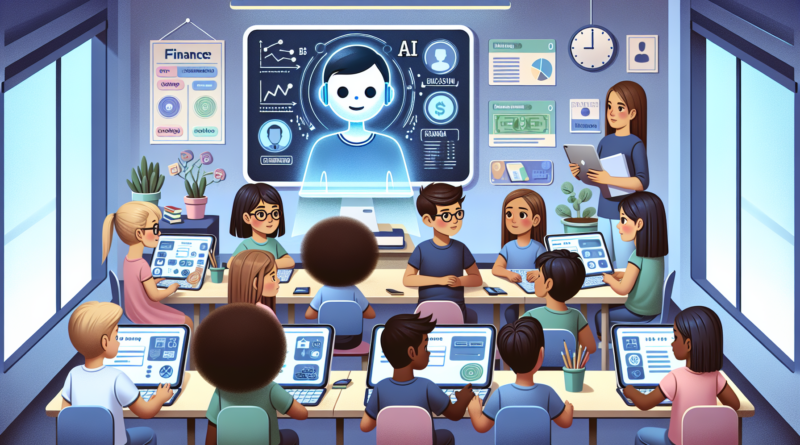
Financial Education in the Digital Age: Utilizing Online Platforms and AI Tutors
FinEd Today
Financial Education in the Digital Age
Benefits of Online Financial Education
1. **Accessibility**: Learn from anywhere at any time.
2. **Affordability**: Many resources are free or low-cost.
3. **Variety**: Wide range of topics and courses.
4. **Pace**: Learn at your own speed.
5. **Expertise**: Access to content from financial experts.
2. **Affordability**: Many resources are free or low-cost.
3. **Variety**: Wide range of topics and courses.
4. **Pace**: Learn at your own speed.
5. **Expertise**: Access to content from financial experts.
Advantages of AI Tutors in Financial Education
1. **Customization**: Tailored learning experiences.
2. **Feedback**: Instant and constructive feedback.
3. **Engagement**: Interactive and adaptive content.
4. **Efficiency**: Focus on areas needing improvement.
5. **Support**: Continuous learning assistance.
2. **Feedback**: Instant and constructive feedback.
3. **Engagement**: Interactive and adaptive content.
4. **Efficiency**: Focus on areas needing improvement.
5. **Support**: Continuous learning assistance.
Strategies for Overcoming Challenges
1. **Partnerships**: Collaborate with tech firms for better access.
2. **Standards**: Develop and adhere to educational benchmarks.
3. **Verification**: Ensure content credibility and accuracy.
4. **Inclusivity**: Design platforms for diverse learning needs.
5. **Support**: Provide guidance for navigating digital resources.
2. **Standards**: Develop and adhere to educational benchmarks.
3. **Verification**: Ensure content credibility and accuracy.
4. **Inclusivity**: Design platforms for diverse learning needs.
5. **Support**: Provide guidance for navigating digital resources.
Preparing for the Future
1. **Innovation**: Stay updated with technological advancements.
2. **Adaptation**: Continuously refine educational strategies.
3. **Immersion**: Explore VR and AR for enhanced learning.
4. **Collaboration**: Work with tech innovators for cutting-edge solutions.
5. **Empowerment**: Equip learners for future financial challenges.
2. **Adaptation**: Continuously refine educational strategies.
3. **Immersion**: Explore VR and AR for enhanced learning.
4. **Collaboration**: Work with tech innovators for cutting-edge solutions.
5. **Empowerment**: Equip learners for future financial challenges.
In conclusion, the digital age has revolutionized financial education, making it more accessible, personalized, and engaging. By leveraging online platforms and AI tutors, individuals can gain the financial literacy needed to thrive in today’s world. As we look to the future, embracing technological advancements will be key to ensuring that financial education remains relevant and effective.