Revolutionizing Medical Education with AI
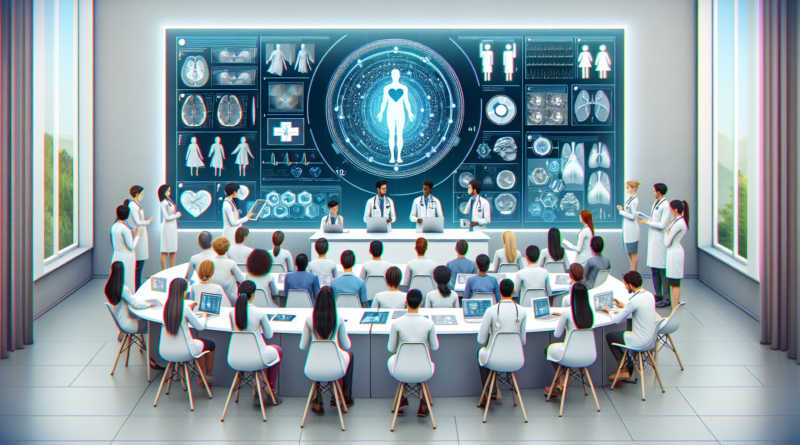
Artificial Intelligence (AI) is transforming various sectors, and medical education is no exception. By integrating AI into the learning process, future doctors and nurses can benefit from personalized learning experiences, enhanced diagnostic skills, and improved patient care techniques. AI tools can simulate real-life scenarios, providing students with hands-on experience without the risks associated with live patients.
Personalized Learning Experiences
AI in medical education offers personalized learning paths tailored to individual student needs. Through adaptive learning platforms, AI can assess a student’s strengths and weaknesses, providing customized content that enhances understanding and retention. This approach ensures that students receive the most relevant information, allowing them to focus on areas that require improvement.
AI-Powered Simulations
AI-powered simulations are a game-changer in medical training. These simulations provide realistic scenarios where students can practice procedures, make decisions, and learn from mistakes in a controlled environment. This hands-on experience is invaluable, as it prepares students for real-world challenges without compromising patient safety.
AI tools are enhancing diagnostic skills by providing students with access to vast databases of medical information. These tools can analyze symptoms, suggest possible diagnoses, and recommend treatment plans. By familiarizing students with AI diagnostic tools, medical education programs are equipping future healthcare professionals with the skills needed to leverage technology in patient care.
Improved Patient Care Techniques
AI is not only improving diagnostic skills but also enhancing patient care techniques. Through AI-driven analytics, students can learn how to interpret patient data more effectively, leading to better treatment outcomes. AI can identify patterns and trends that may not be immediately apparent, allowing for more informed decision-making in patient care.
The Future of Medical Education
The integration of AI in medical education is paving the way for a new era of learning. By embracing AI technologies, educational institutions can provide students with the tools they need to succeed in a rapidly evolving healthcare landscape. As AI continues to advance, its role in medical education will only grow, offering even more opportunities for innovation and improvement.
While AI offers numerous benefits in medical education, it also presents challenges. Ensuring data privacy and security is paramount, as is maintaining the human element in patient care. Educators must balance the use of AI with traditional teaching methods to ensure that students develop both technical and interpersonal skills.
Conclusion
Artificial Intelligence is revolutionizing medical education by providing personalized learning experiences, enhancing diagnostic skills, and improving patient care techniques. As AI technology continues to evolve, its integration into medical education will become increasingly essential. By embracing AI, future doctors and nurses will be better equipped to meet the demands of modern healthcare, ultimately leading to improved patient outcomes and a more efficient healthcare system.