A New Paradigm in Cancer Treatment: The Role of Immunotherapy
ImmunoRx
1. Introduction2. Mechanisms
Understanding Immunotherapy
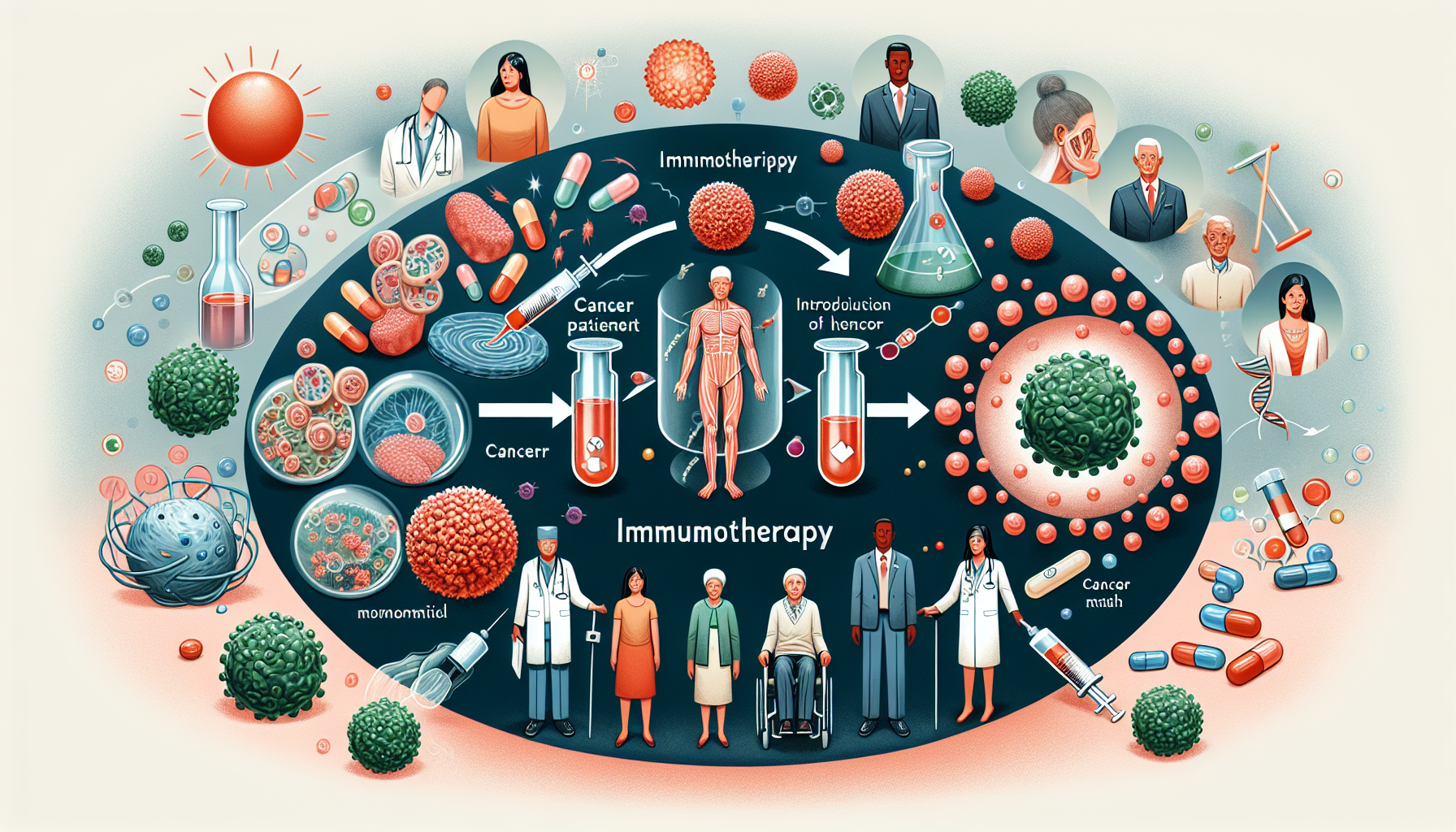
Immunotherapy represents a groundbreaking shift in cancer treatment, focusing on harnessing the body’s immune system to combat cancer cells. Unlike traditional methods such as chemotherapy and radiation, which directly target cancer cells, immunotherapy empowers the immune system to recognize and destroy these cells. This approach not only aims to treat cancer more effectively but also seeks to reduce side effects associated with conventional treatments.
The mechanisms of immunotherapy are diverse, involving several strategies to enhance immune response.
One common approach is the use of checkpoint inhibitors, which block proteins that prevent the immune system from attacking cancer cells. Another strategy involves CAR T-cell therapy, where a patient’s T-cells are modified to better recognize and attack cancer cells. Additionally, cancer vaccines are being developed to stimulate the immune system to target specific cancer antigens.
These mechanisms are continually being refined and tested in clinical trials, with the goal of improving efficacy and expanding the range of treatable cancers. As research progresses, new combinations of immunotherapy and other treatments are being explored to maximize patient outcomes.
These mechanisms are continually being refined and tested in clinical trials, with the goal of improving efficacy and expanding the range of treatable cancers. As research progresses, new combinations of immunotherapy and other treatments are being explored to maximize patient outcomes.
Case Studies
Several case studies highlight the transformative impact of immunotherapy on cancer treatment. In one notable example, a patient with advanced melanoma achieved complete remission after receiving a combination of checkpoint inhibitors. Another case involved a patient with leukemia who responded positively to CAR T-cell therapy, achieving long-term remission.
These success stories underscore the potential of immunotherapy to change the landscape of cancer treatment. However, they also highlight the need for continued research to understand why some patients respond while others do not.
These success stories underscore the potential of immunotherapy to change the landscape of cancer treatment. However, they also highlight the need for continued research to understand why some patients respond while others do not.