Choosing Between Car Loans and Mortgage Loans
Car loans are specifically designed for purchasing vehicles. They are typically shorter in duration, ranging from 3 to 7 years. The interest rates for car loans can vary significantly based on factors such as credit score, loan term, and the lender’s policies. **Car loans** often require a down payment, and the vehicle itself serves as collateral. This means if you default on the loan, the lender can repossess the car.
Understanding Mortgage Loans
Mortgage loans are used for purchasing real estate. These loans are long-term, often spanning 15 to 30 years. **Mortgage loans** usually have lower interest rates compared to car loans due to the extended repayment period and the stability of real estate as collateral. The process of obtaining a mortgage is more complex, involving detailed credit checks, income verification, and property appraisals.
Key Differences
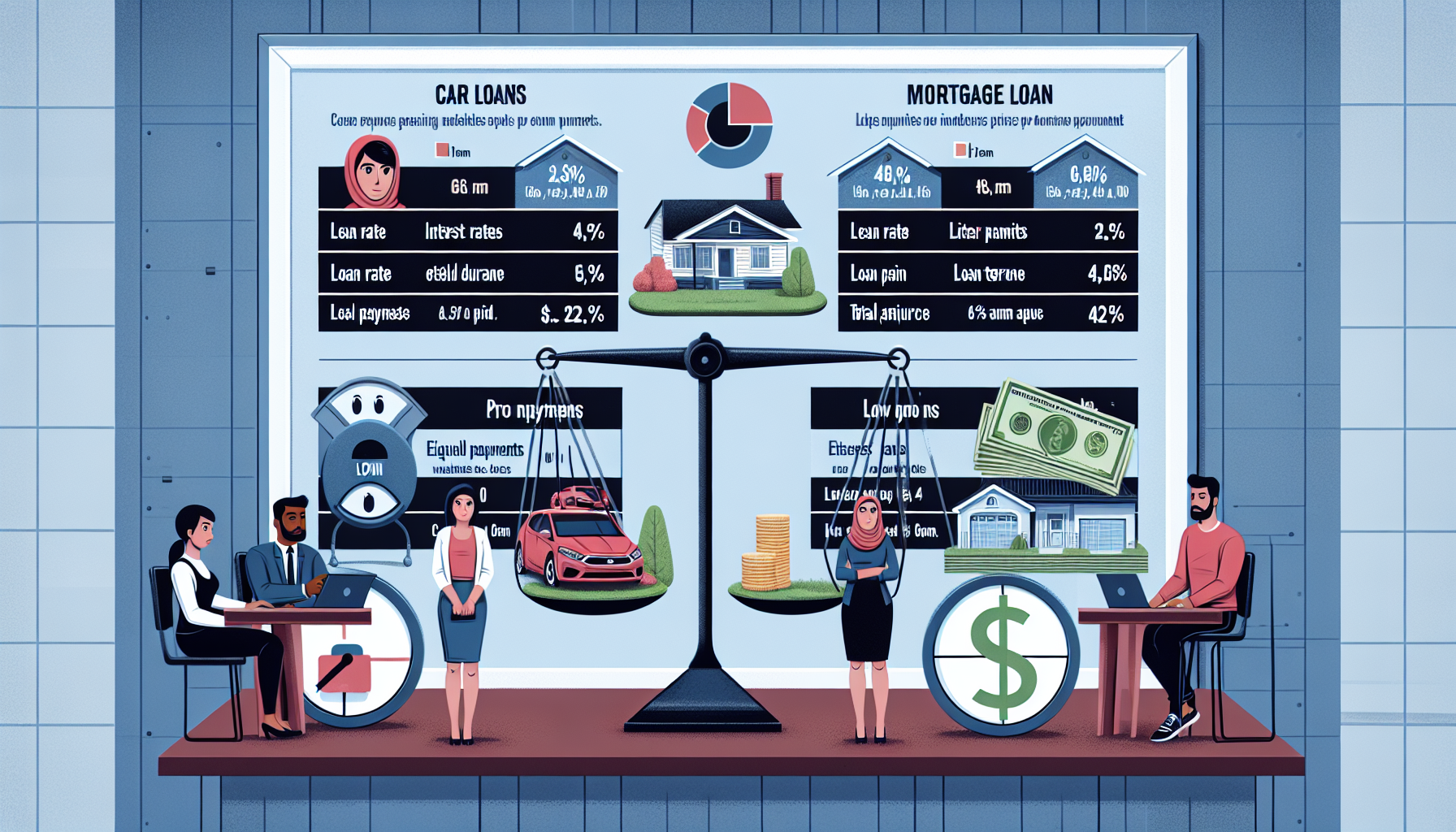
The primary difference between car loans and mortgage loans lies in their purpose and terms. **Car loans** are for vehicles, have shorter terms, and higher interest rates. **Mortgage loans** are for real estate, have longer terms, and generally lower interest rates. Additionally, the approval process for mortgages is more stringent due to the higher loan amounts and longer commitment.
Factors to Consider
When deciding between a car loan and a mortgage loan, consider the following factors:
– **Purpose**: Determine whether you need a vehicle or a home.
– **Budget**: Assess your financial situation and ability to make monthly payments.
– **Interest Rates**: Compare the interest rates offered by different lenders.
– **Loan Term**: Consider how long you want to be in debt.
– **Collateral**: Understand the implications of using your car or home as collateral.
Making the Right Choice
Choosing between a car loan and a mortgage loan depends on your individual needs and financial situation. Evaluate your priorities, such as the necessity of a vehicle versus owning a home, and consider the long-term financial impact of each option. Consult with financial advisors to make an informed decision that aligns with your goals.
**Pros**:
– Shorter loan terms mean quicker repayment.
– Easier approval process compared to mortgages.
– Flexibility in choosing new or used vehicles.
**Cons**:
– Higher interest rates than mortgages.
– Depreciation of vehicle value over time.
– Potential for repossession if payments are missed.
Pros and Cons of Mortgage Loans
**Pros**:
– Lower interest rates due to longer terms.
– Potential for property value appreciation.
– Tax benefits on mortgage interest.
**Cons**:
– Longer commitment and higher total interest paid over time.
– Complex approval process with extensive documentation.
– Risk of foreclosure if unable to meet payments.
Loan Application Process
The application process for both car loans and mortgage loans involves several steps:
1. **Credit Check**: Lenders assess your creditworthiness.
2. **Income Verification**: Proof of income is required to ensure you can repay the loan.
3. **Collateral Evaluation**: For car loans, the vehicle’s value is assessed; for mortgages, a property appraisal is conducted.
4. **Loan Approval**: Based on the above factors, the lender decides whether to approve the loan.
Impact on Financial Health
Both car loans and mortgage loans can significantly impact your financial health. It’s crucial to maintain a good credit score, make timely payments, and avoid overextending your budget. Consider the long-term implications of each loan type on your financial stability and future goals.
Final Thoughts
Deciding between a car loan and a mortgage loan is a significant financial decision. Weigh the pros and cons, consider your current financial situation, and think about your long-term goals. Whether you’re looking to drive a new car or settle into a new home, make sure your choice supports your financial well-being.
In conclusion, both car loans and mortgage loans have their unique advantages and challenges. By understanding the differences and evaluating your personal needs, you can make an informed decision that best suits your lifestyle and financial objectives. Remember to consult with financial experts and explore various lending options to secure the best terms possible.