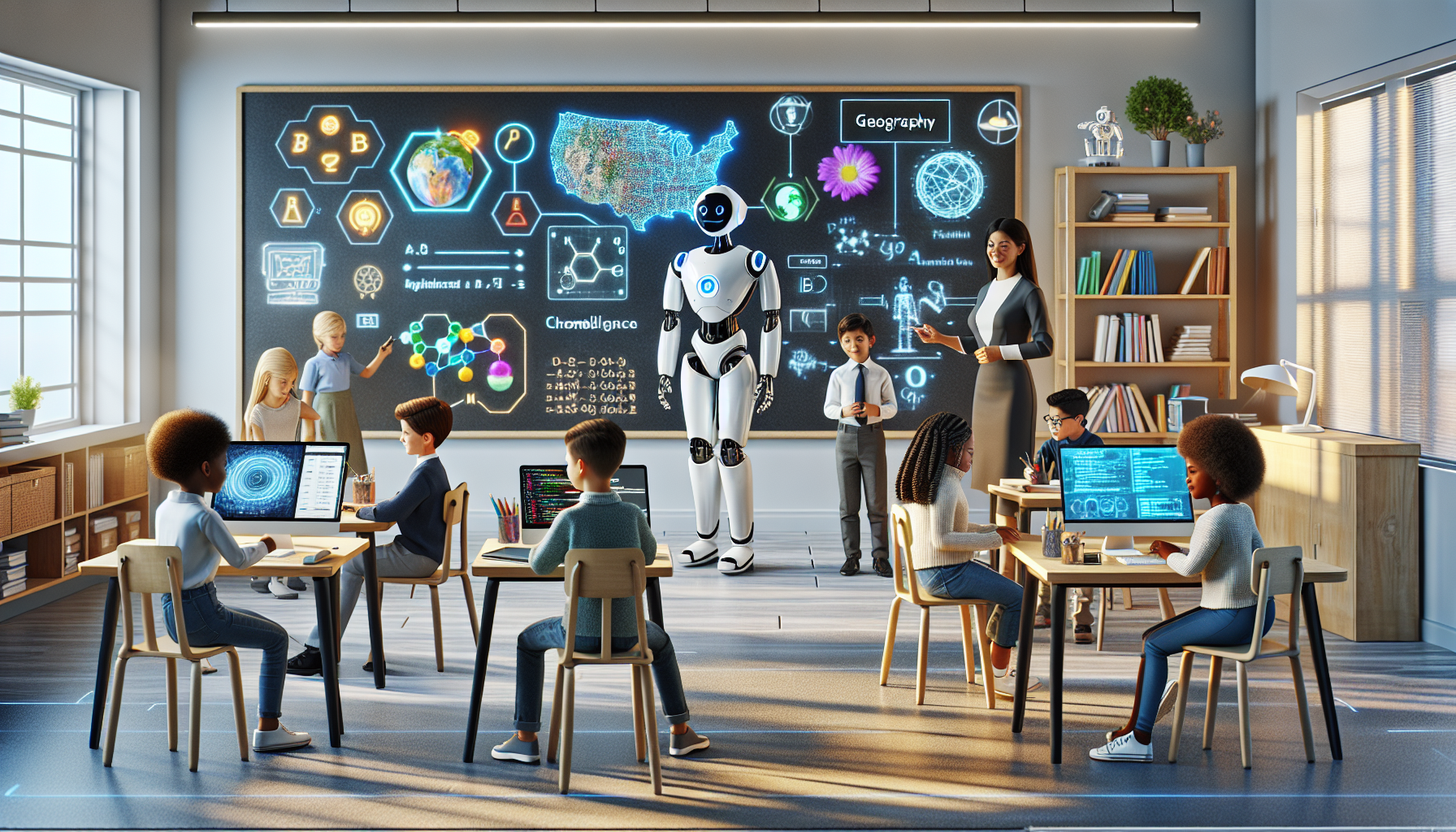
Transforming Education with AI
Artificial Intelligence (AI) is revolutionizing the educational landscape by introducing innovative tools and methods that enhance learning experiences. AI technologies are being integrated into classrooms to personalize learning, automate administrative tasks, and provide intelligent tutoring systems. This transformation is not only making education more accessible but also more engaging and effective for students worldwide.
Personalized Learning Experiences
One of the most significant impacts of AI in education is the ability to provide personalized learning experiences. AI algorithms analyze students’ learning patterns, strengths, and weaknesses to tailor educational content that suits individual needs. This customization ensures that students receive the right level of challenge and support, fostering a more effective learning environment.
Benefits of Personalized Learning
– **Improved Engagement:** Students are more engaged when learning materials are relevant to their interests and skill levels.
– **Faster Progress:** Tailored content helps students progress at their own pace, leading to quicker mastery of subjects.
– **Enhanced Motivation:** Personalized feedback and adaptive learning paths keep students motivated and focused on their goals.
AI is also streamlining administrative processes in educational institutions. Tasks such as grading, scheduling, and student enrollment are being automated, freeing up educators’ time to focus on teaching and mentoring. AI-powered systems can quickly analyze large volumes of data, providing insights that help schools optimize their operations and improve student outcomes.
Intelligent Tutoring Systems
Intelligent Tutoring Systems (ITS) are another groundbreaking application of AI in education. These systems provide students with personalized tutoring, offering explanations, feedback, and hints in real-time. ITS can adapt to each student’s learning style, ensuring that they receive the support they need to succeed. This technology is particularly beneficial in subjects like mathematics and science, where students often require additional guidance.
Advantages of Intelligent Tutoring Systems
– **24/7 Availability:** Students can access tutoring support anytime, anywhere, enhancing their learning flexibility.
– **Immediate Feedback:** Instant feedback helps students correct mistakes and understand concepts more deeply.
– **Scalable Support:** ITS can accommodate a large number of students simultaneously, making it a cost-effective solution for educational institutions.
AI is also playing a crucial role in classroom management. Tools powered by AI can monitor student behavior, track attendance, and even predict potential dropouts. By analyzing data on student engagement and performance, educators can intervene early to provide support and resources to students who may be struggling. This proactive approach helps improve retention rates and overall student success.
Challenges and Considerations
While AI offers numerous benefits to the educational sector, it also presents challenges that need to be addressed. Privacy concerns, data security, and the digital divide are significant issues that educators and policymakers must consider. Ensuring that AI technologies are implemented ethically and equitably is crucial to maximizing their positive impact on education.
Addressing AI Challenges in Education
– **Data Privacy:** Implement robust data protection measures to safeguard student information.
– **Equitable Access:** Ensure all students have access to AI tools, regardless of their socio-economic background.
– **Ethical Use:** Develop guidelines and policies to govern the ethical use of AI in educational settings.
The future of AI in education is promising, with ongoing advancements poised to further transform the classroom experience. As AI technologies continue to evolve, they will offer even more sophisticated tools for personalized learning, classroom management, and administrative efficiency. Educators and institutions must stay informed and adapt to these changes to harness the full potential of AI in education.
Conclusion
AI is undoubtedly reshaping the educational landscape, offering innovative solutions that enhance learning and teaching. By embracing AI technologies, educators can create more dynamic, personalized, and efficient learning environments that prepare students for the challenges of the future. As we continue to explore the possibilities of AI in education, it is essential to address the challenges and ensure that these technologies are used responsibly and inclusively.
Embrace the Future of Education with AI
Artificial Intelligence is transforming education by providing personalized learning experiences, automating administrative tasks, and offering intelligent tutoring systems. By addressing challenges and ensuring equitable access, educators can harness the power of AI to create a brighter future for students worldwide.